Table of Contents
- Why Residential Electrical Safety Inspections Matter
- Electrical Panel Inspection Checklist: What to Look For
- Electrical Warning Signs in a House You Should Never Ignore
- Room-by-Room Outlet and Switch Inspection
- How Often to Inspect Home Electrical Wiring
- Downloadable Electrical Inspection Checklist PDF
- When to Call a Licensed Electrician
- Conclusion
- Frequently Asked Questions
Last Updated: October 11, 2026
Why Residential Electrical Safety Inspections Matter
A residential electrical safety inspection checklist is your first line of defense against fire hazards, electrical shocks, and code violations that could put your family at risk. At Strong Tower Solar Electrical Services & Generators LLC, we work with homeowners throughout Austin.
Electrical fires account for a significant portion of home fires annually. Many of these fires start in walls, attics, or behind appliances where faulty wiring goes unnoticed for months or years. An inspection catches these issues before they become emergencies.
Beyond safety, a thorough electrical safety inspection checklist protects your home’s value. When you sell, buyers and their lenders often require proof that electrical systems meet current code standards. Older homes built in the 1980s or earlier frequently have outdated panels, insufficient grounding, or wiring that no longer meets modern standards, especially if you’re planning upgrades like EV chargers or new appliances.
The best time to inspect is now, not when something fails. A professional electrical safety inspection checklist takes 2-3 hours and identifies everything from loose connections to inadequate circuit capacity.
Electrical Panel Inspection Checklist: What to Look For
Your electrical panel is the nerve center of your home’s power system. A proper electrical panel inspection checklist examines the panel itself, the breakers, and the connections feeding it.
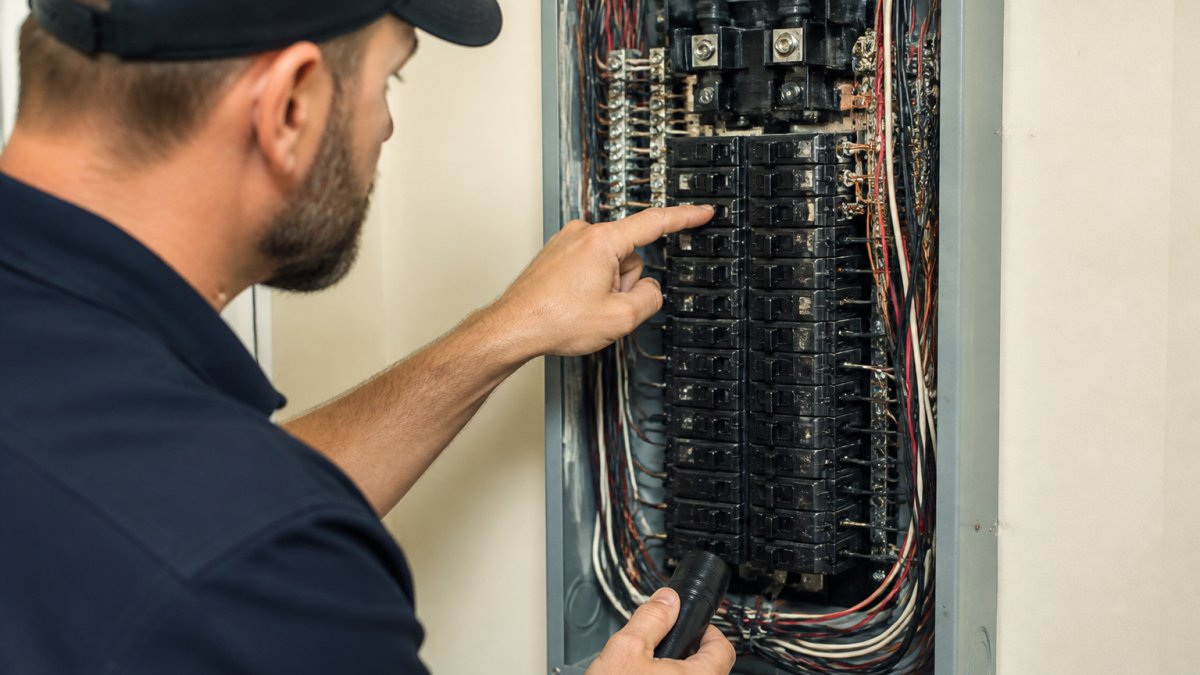
Start by checking the panel’s age and type. Panels manufactured before the year 2000 may use outdated technology or materials that no longer meet code.
Next, verify the main breaker is properly sized and functioning. The main breaker should match your home’s electrical service capacity, typically 100, 150, or 200 amps for modern homes.
Check that all breakers are the correct type for your panel and properly rated. Breakers should not be double-tapped (two wires on one breaker) unless the breaker is specifically rated for it.
Verify the panel has a proper grounding system. Bonding wires should connect the neutral and ground buses, and a ground rod or water pipe connection should extend outside.
Electrical Warning Signs in a House You Should Never Ignore
Certain electrical warning signs demand immediate attention. They indicate problems that could escalate quickly if ignored.
Flickering lights are one of the most common warning signs. While occasional flicker might seem minor, persistent flickering suggests loose connections, failing breakers, or inadequate service capacity.
Outlets that feel warm to the touch are dangerous. Heat at an outlet means excessive resistance in the circuit, which can cause fires.
Burning smells near outlets, panels, or appliances are emergency signals. Electrical fires often announce themselves with a distinct burnt plastic or wood smell before flames appear.
Frequent breaker trips indicate the circuit is overloaded or there’s a short circuit. One or two trips might be coincidental, but regular tripping means the circuit is working too hard.
Buzzing sounds from outlets, switches, or the panel suggest arcing or loose connections. Arcing occurs when electricity jumps across a gap, creating heat and potential fire risk.
Discoloration around outlets or switches, scorch marks, dark spots, or charring, indicates heat damage.
Room-by-Room Outlet and Switch Inspection
A comprehensive electrical safety inspection checklist examines every outlet and switch in your home. This room-by-room approach ensures nothing is missed and helps you prioritize repairs based on risk level.
In kitchens and bathrooms, check that all outlets are GFCI-protected (Ground Fault Circuit Interrupter).
Test GFCI outlets by pressing the test button, power should cut off immediately. Press reset to restore power.
In bedrooms and living areas, count the number of outlets and verify they’re adequate. Code requires outlets every 6 feet along a wall. Bedrooms should have outlets on each wall.
Check that all outlets are grounded. A simple three-prong outlet has a round or U-shaped third hole for the ground pin. Two-prong outlets in older homes lack grounding.
Inspect switches for loose covers, cracks, or signs of heat damage. Switches should feel solid when pressed, loose or wobbly switches indicate loose connections behind the wall.
In laundry rooms and utility spaces, verify that high-amperage appliances like dryers and water heaters have dedicated circuits. Dryers typically require a 240-volt dedicated circuit.
How Often to Inspect Home Electrical Wiring
The frequency of electrical safety inspections depends on your home’s age and condition. A home’s electrical system doesn’t improve with age, it degrades. Understanding inspection timing helps you stay ahead of problems.
For homes built before 1970, annual inspections are wise. Wiring deteriorates over decades, insulation becomes brittle, and connections loosen.
Homes built between 1970 and 2000 should be inspected every 3-5 years. These homes often have serviceable systems but may lack modern safety features like GFCI protection or adequate grounding.
Newer homes built after 2000 should be inspected every 5-7 years as routine maintenance. Modern code compliance is better, but problems still develop. Loose connections, failing breakers, and wear don’t respect construction dates.
Inspect immediately after any of these events: lightning strikes, electrical fires in the neighborhood, water damage, renovation work, or major appliance installation. These situations create risk even in newer homes.
If you’ve had electrical work done by a contractor, verify the work passed inspection. Unpermitted electrical work is common and dangerous.
Downloadable Electrical Inspection Checklist PDF
A downloadable electrical inspection checklist PDF gives you a structured tool to track your home’s electrical condition. Use this checklist during your inspection to document findings and prioritize repairs.
Residential Electrical Safety Inspection Checklist
| Inspection Item | Location/Details | Status | Notes |
|---|---|---|---|
| Panel age and manufacturer | Panel door | ✓ or ✗ | Older than 20 years? |
| Main breaker size and condition | Panel interior | ✓ or ✗ | Matches service capacity? |
| Breaker connections | All breakers | ✓ or ✗ | Any corrosion or damage? |
| Grounding system | Panel and exterior | ✓ or ✗ | Ground rod connected? |
| GFCI outlets | Kitchen, bathroom, exterior | ✓ or ✗ | Test and reset working? |
| Outlet count per room | All rooms | ✓ or ✗ | Adequate for usage? |
| Grounded three-prong outlets | Living areas, bedrooms | ✓ or ✗ | Two-prong outlets present? |
| Switch operation | All switches | ✓ or ✗ | Any loose or non-functioning? |
| Warm outlets or switches | Throughout home | ✓ or ✗ | Any heat detected? |
| Burning smells | Panel, outlets, appliances | ✓ or ✗ | Any odors detected? |
| Breaker trip frequency | Main and individual circuits | ✓ or ✗ | Regular trips noted? |
| Flickering lights | All rooms | ✓ or ✗ | Persistent or occasional? |
| Dedicated circuits for major appliances | Dryer, water heater, AC | ✓ or ✗ | Proper amperage? |
| Outlet covers and condition | All outlets | ✓ or ✗ | Cracks, discoloration, damage? |
| Exterior outlet protection | Outside outlets | ✓ or ✗ | GFCI and weatherproof covers? |
Print this checklist and walk through your home systematically. Document every finding. If you discover issues, photograph them and note the location. This record helps any electrician you hire understand your home’s condition and prioritize work.
When to Call a Licensed Electrician
Not every electrical issue requires professional help, but many do. Knowing when to call separates smart maintenance from dangerous DIY attempts.
Call immediately if you detect any of the warning signs mentioned above: burning smells, warm outlets, frequent breaker trips, or buzzing sounds. These are emergencies or near-emergencies. Electrical problems can escalate quickly and cause fires or shocks.
Call before attempting any electrical upgrades. If you want to add circuits, install an EV charger, upgrade your panel, or add new outlets, hire a licensed electrician. These projects require permits and inspections.
Call if your home is older than 40 years and has never been professionally inspected. Older wiring, panels, and connections need expert evaluation. You can’t see deterioration inside walls or behind panels.
Call if you’re planning to sell your home. A professional inspection and any necessary repairs protect your sale and your conscience.
Call if you’re upgrading major appliances or adding significant electrical load (like a new air conditioning system). Your panel may need to be upgraded to handle the additional demand.
Strong Tower Solar Electrical Services & Generators LLC serves Austin and the surrounding area with master electricians who handle everything from inspections to complex upgrades.
Keep a record of all electrical inspections and repairs. This documentation proves your home’s electrical system is maintained and code-compliant. It’s valuable when selling and helps future electricians understand your home’s history.
Conclusion
A residential electrical safety inspection checklist is not optional maintenance, it’s essential protection for your family and your home. Whether your house is brand new or built decades ago, regular inspections catch problems early, prevent fires, and ensure your electrical system meets current safety standards.
Start with a thorough inspection using the checklist above. Document your findings and prioritize repairs based on safety risk. If you discover issues or want professional evaluation, Strong Tower Solar Electrical Services & Generators LLC provides comprehensive electrical inspections and code-compliant repairs throughout Austin.
According to the National Fire Protection Association (NFPA), electrical and lighting equipment is involved in a significant percentage of home fires annually. For homeowners in Austin seeking expert evaluation, NFPA fire safety resources provide additional information on electrical fire prevention. The National Electrical Code (NEC) standards govern electrical installation safety across the United States and form the basis for local electrical codes.
Frequently Asked Questions
What does a residential electrical safety inspection include?
A comprehensive residential electrical safety inspection examines your electrical panel, circuit breakers, outlets, switches, wiring, grounding systems, and appliance connections. The inspector checks for code violations, fire hazards, improper installations, and signs of wear or damage. They verify that your system meets current National Electrical Code standards and can safely handle your home’s power demands, especially if you’ve added major appliances or upgrades like EV chargers or heat pumps.
How often should a home’s electrical system be inspected?
Most homes should have a professional electrical inspection every 3 to 5 years. Homes built before 1980 or those with older wiring should be inspected more frequently, ideally every 2 to 3 years. If you’ve recently purchased a home, added major appliances, experienced electrical problems, or installed new systems like solar panels or generators, schedule an inspection immediately. After any significant electrical work or repair, a follow-up inspection ensures the work meets code.
What electrical problems should homeowners look for during a safety check?
Watch for flickering or dimming lights, outlets that feel warm to the touch, frequently tripping breakers, burning smells near outlets or the electrical panel, discolored outlets or switch plates, sparks when plugging in appliances, and buzzing sounds from outlets or the panel. Also check for outdated two-prong outlets in bathrooms and kitchens, missing outlet covers, water damage near electrical components, and visible corrosion on the panel. Any of these signs warrant a call to a licensed electrician.
How can I tell if my electrical panel needs an inspection or upgrade?
Schedule an inspection if your panel is older than 25 years, frequently trips breakers, has a fuse box instead of modern breakers, shows rust or corrosion, or you’re adding high-demand appliances like EV chargers, swim spas, or heat pumps. An upgrade may be necessary if your home has only 100-amp service and you’ve added multiple electrical loads, or if the panel contains outdated or recalled components. A licensed electrician can assess whether your current panel can handle your needs or requires upgrading.
Can I inspect my home’s electrical system myself?
You can perform a visual inspection for obvious hazards like exposed wiring, damaged outlets, or burning smells, but a comprehensive electrical safety inspection requires a licensed electrician. Electrical systems are complex and potentially dangerous. A professional has the tools, training, and knowledge to identify code violations, hidden hazards, and whether your system meets current standards. DIY inspections cannot detect problems inside walls, behind panels, or with grounding systems that a professional inspection would catch.
When should I call a licensed electrician for an electrical safety inspection?
Call immediately if you notice burning smells, warm outlets, frequent breaker trips, sparks, or buzzing sounds. Schedule an inspection if you’re buying a home, your electrical panel is over 25 years old, you’re adding major appliances, or you haven’t had a professional inspection in several years. If you’re in an older home or have experienced electrical problems before, don’t delay. A licensed electrician can identify safety hazards and code violations that protect your home and family from fire and shock risks.
How long does a residential electrical inspection take?
A typical residential electrical safety inspection takes 1 to 3 hours, depending on your home’s size, age, and complexity. Older homes or those with known issues may require more time. The inspector examines the electrical panel, tests outlets and switches, checks grounding systems, reviews appliance connections, and looks for code violations throughout the house. They’ll provide a detailed report with findings and recommendations. Emergency inspections triggered by safety concerns may be prioritized for faster scheduling.