Table of Contents
- Why Your Electrical Panel Matters
- Circuit Breaker Keeps Tripping Frequently
- How to Fix Flickering Lights in Your House
- Physical Damage and Corrosion on Your Panel
- Burning Smells and Scorch Marks
- Average Cost to Replace Electrical Panel
- When to Call a Licensed Electrician vs. DIY Inspection
- Frequently Asked Questions
Last Updated: September 23, 2026
Why Your Electrical Panel Matters
Your electrical panel is the heart of your home’s power system. It distributes electricity throughout your house and protects your circuits from overload through breakers. When this critical component fails or becomes outdated, it puts your entire home at risk.
An aging or damaged electrical panel can’t safely handle modern electrical demands. Homes built in the 1980s or earlier often have panels designed for appliances that used far less power than today’s equipment. Adding an EV charger, heat pump, or other high-capacity device to an undersized panel creates serious safety concerns. At Strong Tower Solar Electrical Services & Generators LLC, we’ve identified the warning signs that homeowners should never ignore. Understanding these signals helps you avoid electrical fires, power disruptions, and costly emergency repairs.
The good news: recognizing when your electrical panel needs replacement early can save thousands in damage and prevent dangerous situations. This guide covers the most common warning signs and what to do when you spot them.
Circuit Breaker Keeps Tripping Frequently
A circuit breaker that trips repeatedly is your panel’s way of saying it’s overworked. When a breaker trips, it’s cutting power to prevent an electrical fire. If this happens often, your circuits are drawing more current than they safely handle.
Occasional tripping is normal when you overload a single outlet. Frequent tripping across multiple circuits suggests a deeper problem. Your panel may be undersized for your home’s electrical load, or individual circuits are wired incorrectly.
Common causes include:
- Too many high-draw appliances running simultaneously
- A faulty breaker that needs replacement
- An undersized service panel
- Wiring problems in specific circuits
The real issue: if you’re constantly resetting breakers, your panel is working at or beyond capacity. Adding new appliances like an EV charger or swim spa will only make the problem worse. This is one of the clearest signs your electrical panel needs replacement or at minimum a professional inspection.
Constantly resetting a tripped breaker without finding the root cause creates fire risk. Do not ignore repeated tripping. Call a licensed electrician immediately.
How to Fix Flickering Lights in Your House
Flickering lights often point to panel problems, though the cause varies. Dimming when appliances start up is usually normal. Constant flickering throughout your home suggests something more serious.
When lights flicker, it typically means voltage is fluctuating. Your panel controls voltage distribution. If the panel is failing, it can’t maintain stable voltage to your circuits. Flickering may indicate loose connections inside the panel, a failing main breaker, or a problem with your utility connection.
To diagnose flickering lights:
- Note whether it happens in one room or throughout the house
- Check if it coincides with running major appliances
- Observe if flickering is constant or intermittent
Whole-house flickering points to panel-level issues. Single-room flickering usually means a circuit problem. Either way, a licensed electrician should investigate. Flickering that worsens over time often precedes more serious electrical failures. Many homeowners treat this as a minor annoyance until their panel fails completely. Don’t wait.
Physical Damage and Corrosion on Your Panel
Visible damage to your breaker box is a red flag that demands immediate attention. Rust, corrosion, scorch marks, or burn damage all indicate your panel has experienced electrical stress or environmental exposure.
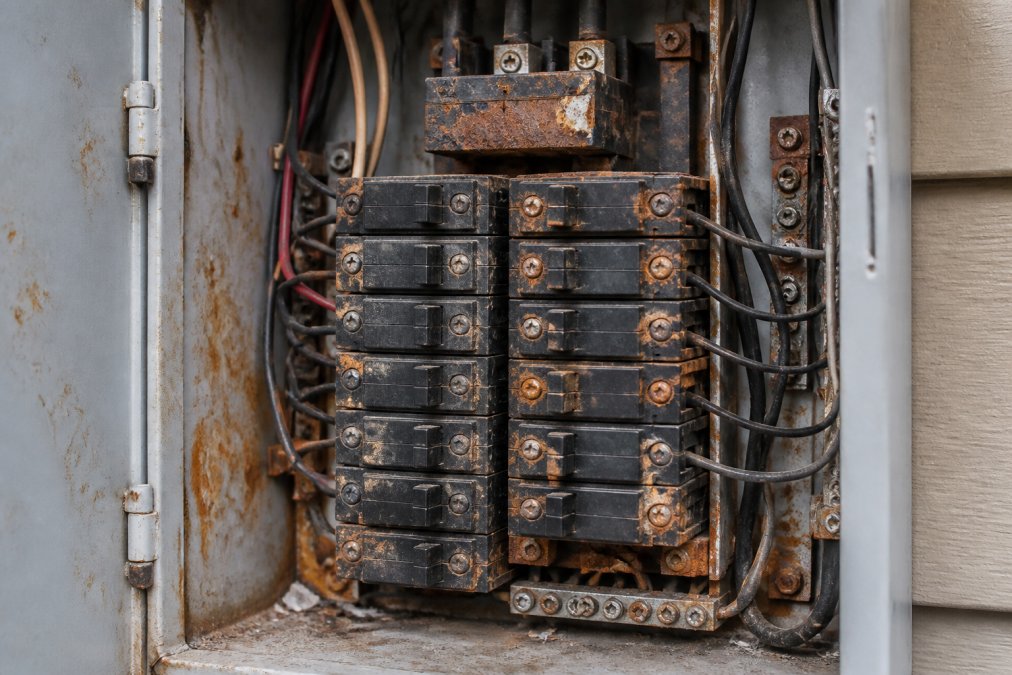
Corrosion happens when moisture reaches metal components inside the panel. This weakens connections and creates fire risk. Scorch marks show where arcing has occurred, electricity jumping between conductors where it shouldn’t. Both are serious warning signs.
Check your panel for:
- Orange or brown rust on metal components
- White or blue corrosion deposits
- Burn marks or blackened areas
- Loose or missing knockouts (openings where wires enter)
- Moisture inside the enclosure
If you see any of these, your panel has already been compromised. Corrosion spreads. Scorch marks indicate arcing has happened. These conditions don’t improve on their own. Physical damage is one of the strongest indicators your electrical panel needs replacement soon.
Moisture damage accelerates in basements or crawlspaces. If your panel is in a damp area, have it inspected annually. Prevention is far cheaper than emergency replacement.
Burning Smells and Scorch Marks
A burning smell near your electrical panel is an emergency. This indicates overheating wires or components inside the panel. The smell of burning plastic or rubber means insulation is melting.
Scorch marks on the panel exterior or visible through breaker openings show extreme heat. This heat damages the panel’s internal components and creates immediate fire risk. Don’t ignore this warning.
A burning smell combined with any other warning signs means stop using your panel immediately and call an electrician. This is not a “wait and see” situation. Electrical fires start in panels that smell like they’re burning.
Common sources of burning smells:
- Arcing inside the panel
- Overloaded circuits causing excessive heat
- Failing breakers that won’t trip properly
- Loose connections generating resistance and heat
If you smell burning near your panel, leave the area and call a licensed electrician right away.
Average Cost to Replace Electrical Panel
Panel replacement costs vary widely based on amperage upgrade, local labor rates, and code compliance work. Panel replacement costs vary widely based on amperage upgrade, local labor rates, and code compliance work.
Insurance and Home Value Impact
When selling your home, an outdated or failing panel can:
- Reduce sale price as buyers demand credits for replacement
- Trigger inspection contingencies that delay closing
- Cause lenders to require panel replacement before financing approval
Getting Accurate Quotes
Panel replacement is an investment in safety, insurance eligibility, and home value. Delaying replacement often costs more when emergencies force rushed repairs, insurance claims are denied, or you lose thousands at resale.
When to Call a Licensed Electrician vs. DIY Inspection
Electrical panels operate at lethal voltage levels, typically 100 to 200 amps at 240 volts, even when the main breaker is switched off. The main breaker cuts power to the circuits it controls, but the utility lines feeding the panel remain live. This distinction is why panel work is not a DIY project under any circumstances.
What You Can Safely Inspect Yourself
Visual inspection for warning signs requires no tools and no contact with live components:
- Look for visible corrosion, rust, or burn marks on the panel exterior
- Note burning smells or unusual odors near the panel
- Observe how often breakers trip and which circuits are affected
- Document flickering lights and their timing relative to appliance use
- Check for moisture, pests, or debris inside the panel enclosure
Why Panel Work Requires a Licensed Electrician
Beyond safety, electrical code compliance is legally mandatory:
- Permits are required by the National Electrical Code (NEC) for any panel work. Unpermitted work voids your homeowner’s insurance coverage for electrical damage and creates liability if an electrical fire occurs.
- Licensed electricians are bonded and insured. If something goes wrong, you have recourse. DIY work leaves you personally liable.
- Inspections must pass. Your local authority having jurisdiction (AHJ) requires a licensed electrician’s signature on the work and a final inspection before the panel can be energized. This ensures the installation meets current code and is safe.
- Home sales require disclosure. If you perform unpermitted electrical work and later sell your home, you must disclose it. Buyers can demand credits, walk away, or sue if they discover unpermitted work after purchase.
What a Licensed Electrician Does
When you hire a master electrician or journeyman electrician for panel work, they:
- Pull permits from your local building department
- Perform a load calculation to determine the correct amperage for your home’s current and future needs
- Turn off power at the utility (the utility company handles this; homeowners cannot)
- Safely remove the old panel and disconnect all circuits
- Install the new panel, ensuring all connections meet NEC standards
- Test voltage, grounding, and bonding
- Schedule a final inspection with the building department
- Provide documentation of the work for your records and insurance
This process includes all labor, materials, permits, and inspections.
Never attempt to work inside an electrical panel or replace a breaker yourself. The risk of electrocution, arc flash, or fire is extreme. Licensed electricians are trained and equipped to manage these hazards. Your life and home are not worth the risk of DIY shortcuts.
Frequently Asked Questions
How do I know if my electrical panel needs to be replaced?
Your electrical panel needs replacement if you notice frequent tripping circuit breakers, flickering or dimming lights, burning smells near the panel, visible rust or corrosion, scorch marks, or a panel that feels warm to the touch. Panels over 25-30 years old, especially those with fuses instead of breakers, are also candidates for replacement. A licensed electrician can inspect your panel and confirm whether replacement is necessary for safety and code compliance.
Can an old electrical panel cause flickering lights?
Yes, an aging or failing electrical panel can cause flickering lights. This typically occurs when the panel cannot distribute power evenly or when internal connections are loose or corroded. Flickering may indicate insufficient capacity for your home’s electrical load, especially if you’ve added modern appliances or are planning an EV charger installation. A professional inspection can determine if panel replacement will resolve the issue.
What’s the average cost to replace an electric panel?
The cost to replace an electrical panel varies based on your home’s amperage requirements, local electrical code compliance, and the complexity of the installation. Factors like panel size, breaker configuration, and whether rewiring is needed affect pricing. For an accurate estimate tailored to your specific situation, contact a licensed electrician who can assess your current panel and provide a detailed quote.
Is it dangerous to have an old fuse box instead of a circuit breaker?
Yes, older fuse boxes present safety risks compared to modern circuit breaker panels. Fuses rely on manual replacement and offer less reliable overload protection. They cannot handle the electrical demands of modern homes with multiple appliances and are more prone to electrical fire hazards. Circuit breaker systems automatically cut power during overloads, providing better safety and code compliance. Upgrading from fuses to a breaker panel is strongly recommended.
Your electrical panel is too important to ignore. If you’ve noticed any of these warning signs, don’t wait for a crisis. A professional inspection costs far less than an emergency replacement or fire damage. Contact Strong Tower Solar Electrical Services & Generators LLC today for a free estimate and expert assessment of your electrical panel’s condition. Our licensed team will give you a clear picture of what your home needs and help you plan the right solution.