
Last Updated: October 25, 2026
Quick Summary
Backup generator maintenance involves monthly inspections, seasonal service before storm season, and annual professional checks to keep your unit ready for power outages. Regular oil changes every 6 months or 100 hours of use, fuel stabilization, battery care, and test runs prevent failures when you need your generator most.
- Change oil every 100-200 hours of operation or every 6 months, whichever comes first.
- Run your generator for 5-10 minutes monthly under no load to exercise the engine and catch problems early.
- Replace the air filter and spark plug before storm season to ensure peak performance.
- Use fuel stabilizer if storing the generator for more than a month to prevent fuel degradation.
- Keep a maintenance log recording every task, fuel level, and issues to track service history.
Table of Contents
- Why Backup Generator Maintenance Matters for Homeowners
- Understanding Your Home Generator Maintenance Schedule
- Monthly Inspection and Testing Tasks
- Seasonal Maintenance: Preparing Your Generator Before Storm Season
- Oil Changes, Fuel Filters, and Fluid Checks
- Using a Generator Maintenance Log Template to Track Service
- Common Maintenance Mistakes That Reduce Generator Lifespan
- When to Call a Licensed Generator Technician
- Frequently Asked Questions
Why Backup Generator Maintenance Matters for Homeowners
A backup generator is your home’s insurance policy against power outages. When a storm hits or the grid fails, a well-maintained generator keeps your lights on, your food fresh, and your family safe. But here’s what most homeowners miss: buying a generator is only half the battle.
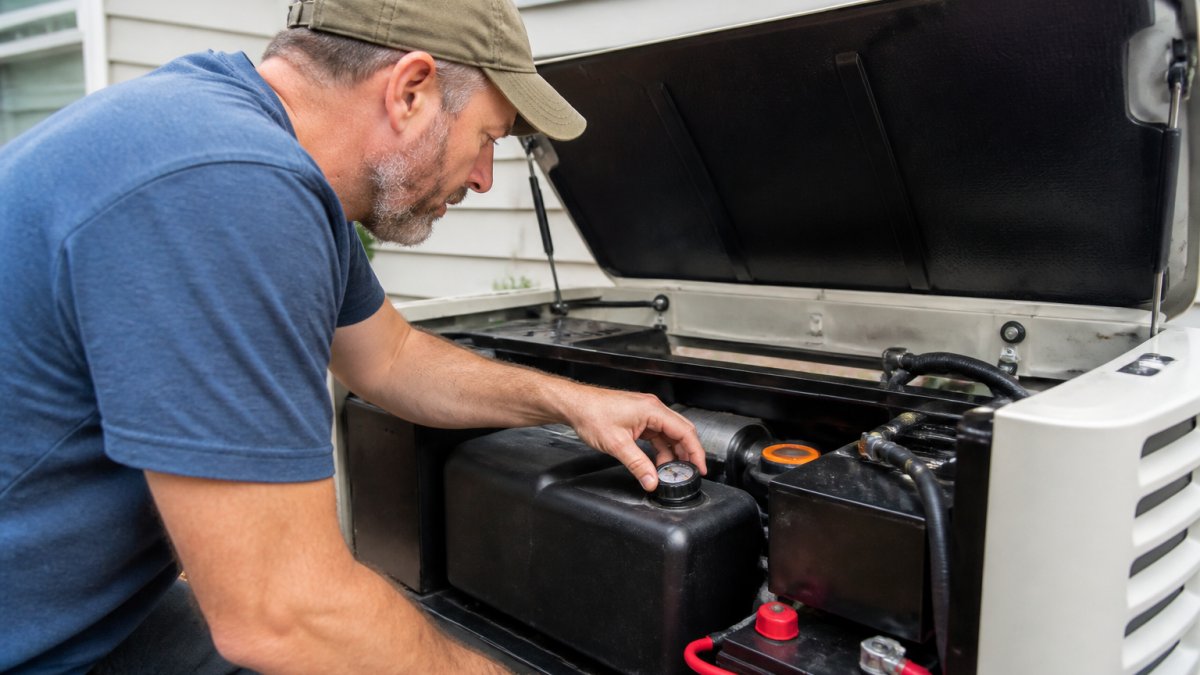
Generators don’t maintain themselves. Oil breaks down. Fuel degrades. Batteries lose charge. Filters clog. Skip regular maintenance and your generator will fail exactly when you need it most.
The difference between a generator that works and one that doesn’t often comes down to one thing: a simple maintenance routine. This backup generator maintenance checklist for homeowners walks you through every task you need to perform to keep your unit ready.
Understanding Your Home Generator Maintenance Schedule
Your backup generator needs attention on three timelines: monthly, seasonal, and annual. Think of it like your car, regular oil changes and inspections prevent breakdowns.
Most manufacturers recommend:
- Monthly checks: Quick visual inspections and test runs
- Seasonal maintenance: Before storm season hits, prepare your unit for heavy use
- Annual service: Deep cleaning, filter replacements, and professional inspection
The exact schedule depends on your generator model and how often you use it. If you run your generator during weekly tests, maintenance needs are different than if it sits idle most of the year. Learn your specific maintenance schedule with our detailed 2026 maintenance guide, it breaks down every task by month and season.
One common mistake is treating maintenance as something you do only after a problem appears. By then, it’s too late. Preventive maintenance catches small issues before they become expensive repairs.
Monthly Inspection and Testing Tasks
Every month, spend 15 minutes on these simple checks. They take almost no time but catch problems early.
Visual Inspection
Walk around your generator and look for obvious damage. Check for:
- Loose bolts or connections
- Cracks in the housing
- Rust or corrosion on metal parts
- Debris blocking air vents
- Damaged fuel lines or hoses
Clear any leaves, dirt, or debris around the unit. Generators need airflow to cool properly. A blocked vent can cause overheating and shutdown during use.
Check Fluid Levels
Open the oil dipstick and check the oil level. Most generators need oil changes every 100-200 hours of use. If your oil looks dark or dirty, change it sooner.
Check the coolant level if your generator has a radiator. Low coolant causes overheating and engine damage.
Test Run Your Generator
Run your generator for 5-10 minutes under no load (no appliances drawing power). Listen for unusual noises. Watch for smoke or leaks. The engine should start smoothly and run quietly.
A test run does two things: it exercises the engine so internal parts don’t corrode, and it tells you immediately if something is wrong. Many homeowners discover problems during this monthly test, and that’s exactly the point.
How to Test a Standby Generator Safely
Before you test, turn off all loads connected to your generator. No appliances, no circuits, nothing drawing power.
Step 1: Check Fuel Level
Open the fuel cap and look inside. Most generators have a fuel gauge on the tank.
Step 2: Inspect the Battery
Look at the battery terminals. They should be clean and tight.
Step 3: Switch to Manual or Test Mode
Set your generator to manual mode. Do not set it to automatic transfer switch mode for this test.
Step 4: Start the Engine
Press the start button or pull the recoil starter. The engine should turn over within 2-3 seconds.
Step 5: Let It Run
Let the generator run for 5-10 minutes. Watch the gauges. Oil pressure should be normal. Temperature should be in the safe range. No smoke should come from the exhaust.
Step 6: Listen and Observe
A healthy generator sounds like a steady engine hum. Knocking, banging, or grinding means something is wrong.
Step 7: Shut Down Properly
Turn off the engine using the stop button. Wait 5 minutes for it to cool.
If your generator doesn’t start or runs rough, contact a licensed generator technician near you for diagnosis and repair.
Seasonal Maintenance: Preparing Your Generator Before Storm Season
Storm season in Austin arrives in spring and again in fall. Two months before severe weather typically hits, perform seasonal maintenance.
Change the Oil and Filter
If you haven’t changed oil in the last 6 months, do it now. Old oil loses its ability to protect the engine. Drain the old oil completely and replace the filter. Use the oil type recommended in your owner’s manual, usually SAE 10W-30 for standby generators.
Replace the Air Filter
A clogged air filter restricts airflow and reduces engine power. Remove the old filter and inspect it. If it’s dirty, replace it.
Inspect the Spark Plug
Remove the spark plug and look at it. A healthy plug has a light tan color.
Test the Transfer Switch
If your generator is connected to a transfer switch, test it. Switch from utility power to generator power.
Top Off Fuel
Fill your fuel tank completely. If you have a backup fuel tank, fill that too.
Check the Battery Charger
Many standby generators have a battery charger that keeps the battery topped off. Make sure the charger is working. A weak battery in an emergency is useless.
Oil Changes, Fuel Filters, and Fluid Checks
Oil is your generator’s lifeblood. It lubricates moving parts and keeps the engine cool. Dirty oil causes wear and eventual failure.
When to Change Oil
Change oil every 100-200 hours of operation or every 6 months, whichever comes first. If you run your generator weekly during testing, you’ll hit the 6-month mark first. If you rarely use it, 6 months is still the limit because oil degrades over time.
How to Change Oil
Warm up the engine for 2-3 minutes. Turn it off and wait 5 minutes. Locate the drain plug under the engine. Place a drain pan underneath. Remove the drain plug and let old oil drain completely. Replace the drain plug.
Fuel Filter Replacement
Fuel filters trap sediment and water. A clogged filter starves the engine of fuel, causing rough running or shutdown. Replace the fuel filter every 1-2 years or if your generator runs rough.
Coolant Checks
If your generator has a radiator, check coolant level monthly. Top off with the coolant type recommended in your manual. Low coolant causes overheating and engine damage.
Using a Generator Maintenance Log Template to Track Service
A maintenance log is your proof that you’ve kept up with care. It also helps you spot patterns, if something needs repair every few months, the log shows it clearly.
Create a simple table with these columns:
| Date | Task | Oil Level | Fuel Level | Run Time | Notes |
|---|---|---|---|---|---|
| 10/15/2026 | Monthly test | Full | Full | 8 min | Engine started normally |
| 11/15/2026 | Monthly test | Low – topped off | Full | 7 min | Slight hesitation on start |
| 12/01/2026 | Oil change | New oil | Full | 10 min | Changed filter, all normal |
Record every maintenance task, every test run, and any issues you notice. When something goes wrong, you have a record to show a technician. This log also reminds you when the next service is due.
Keep the log in a folder with your generator’s manual and warranty paperwork. Store it somewhere you can find it quickly.
Common Maintenance Mistakes That Reduce Generator Lifespan
Most generator problems stem from one of these mistakes.
Mistake 1: Running on Old Fuel
Fuel degrades over time. Gasoline loses its ability to ignite after 3-6 months.
Fix: Use fuel stabilizer if you store the generator for more than a month.
Mistake 2: Ignoring Oil Changes
Oil that hasn’t been changed in a year is no longer protecting your engine.
Fix: Change oil every 6 months or 100 hours of use, whichever comes first. Mark it on your calendar.
Mistake 3: Running the Generator Under Load Without Warming Up
Generators need 2-3 minutes to warm up before you plug in heavy loads. Starting at full power when the engine is cold stresses the system and can cause damage.
Fix: Let it idle for a few minutes. Then gradually add loads.
Mistake 4: Leaving It in Automatic Mode Year-Round
Automatic transfer switch mode means your generator starts itself during an outage.
Fix: Switch to manual mode for monthly test runs.
Mistake 5: Not Cleaning the Battery Terminals
Corrosion on battery terminals blocks the electrical connection.
Fix: Check terminals monthly. Clean any corrosion with a wire brush and a little vinegar.
When to Call a Licensed Generator Technician
Some maintenance you can do yourself. Some tasks require professional tools and expertise. Know the difference.
Do It Yourself:
- Monthly test runs
- Visual inspections
- Checking fluid levels
- Changing oil and filters
- Cleaning battery terminals
Call a Professional:
- Transfer switch testing and repair
- Fuel line inspection and replacement
- Coolant system flushing
- Load bank testing (testing under full power)
- Electrical system diagnostics
- Any repair beyond your comfort level
A licensed generator technician has specialized diagnostic equipment. They can test your generator under full load to confirm it will work during an outage. They can also catch problems you might miss.
In Austin, Strong Tower Solar Electrical Services & Generators LLC provides professional generator maintenance and repair. Our licensed team can handle any backup generator maintenance need, from routine service to emergency repairs.
Professional maintenance typically costs less than an emergency repair call during an actual outage. Schedule it before storm season, not after.
Frequently Asked Questions
What maintenance does a backup generator need?
A backup generator needs regular oil changes (typically every 100-200 hours of operation), fuel filter replacements, battery terminal cleaning, coolant checks, and load testing to verify it starts and runs under demand. Monthly visual inspections for leaks, loose connections, and corrosion help catch problems early. Seasonal preparation before storm season includes fuel stabilization, air filter cleaning, and a full test run. Neglecting these tasks can leave you without power when you need it most.
How often should homeowners service a standby generator?
Schedule professional service annually, ideally before storm season. Between professional visits, perform monthly inspections yourself: check fluid levels, test the unit under load for 20-30 minutes, and look for visible damage or leaks. If your generator runs frequently during outages, increase oil change intervals accordingly. Standby generators that sit idle most of the year still need annual maintenance to stay reliable. A maintenance log helps you track what’s been done and when the next service is due.
How do you test a home backup generator safely?
Start with a visual inspection: check fuel level, battery charge, and coolant. Ensure the transfer switch is in the correct position. Run the generator under load (not just idling) for 20-30 minutes monthly to exercise the engine and confirm it transfers power properly. Never run a generator indoors or in enclosed spaces, exhaust contains carbon monoxide and can be fatal. If the generator fails to start, won’t transfer power, or shuts down unexpectedly, stop testing and contact a licensed technician immediately.
How should you prepare a backup generator for storm season?
Before storm season, have a licensed technician perform a full inspection and service. Fill the fuel tank and add fuel stabilizer to prevent gum buildup during idle periods. Clean or replace the air filter, check battery voltage, verify coolant levels, and test the unit under full load. Ensure the transfer switch works smoothly and test your home’s ability to switch to generator power. Stock extra oil, filters, and fuel stabilizer on hand. A well-maintained generator before storm season can mean the difference between staying safe and losing power for days.
Backup generator maintenance isn’t complicated, but it is essential. A few minutes each month and a professional inspection each year keeps your generator ready. When the power goes out, you’ll be grateful you did. Strong Tower Solar Electrical Services & Generators LLC can handle the professional side of maintenance, get an estimate for generator service and ensure your backup power is ready for anything.
