
Table of Contents
- Understanding Swim Spa Electrical Requirements
- Voltage and Amperage: 240V Circuit and 50-Amp Breaker Basics
- Dedicated Circuit for Swim Spa Installation
- Swim Spa GFCI Breaker Requirements and Protection
- NEC Electrical Code for Outdoor Spas and Swim Spas
- Assessing Your Home’s Electrical Panel Capacity
- Hard-Wired Installation vs. Plug-and-Play Connections
- Permits, Inspections, and Working with Licensed Electricians
- Frequently Asked Questions
Last Updated: September 28, 2026
Understanding Swim Spa Electrical Requirements
Installing a swim spa requires careful electrical planning and licensed help to safely deliver the power this equipment demands, making understanding electrical requirements for swim spa installation essential.
Voltage and Amperage: 240V Circuit and 50-Amp Breaker Basics
Most swim spas run on 240-volt circuits with 50-amp breakers, delivering enough power for the heater, pump, and control systems.
Why 240 Volts Is Standard for Swim Spas
A 240-volt circuit provides the power density swim spas need. Standard household outlets run at 120 volts, only half the voltage required for efficient heater and pump operation.
Amperage Ratings and Load Calculations
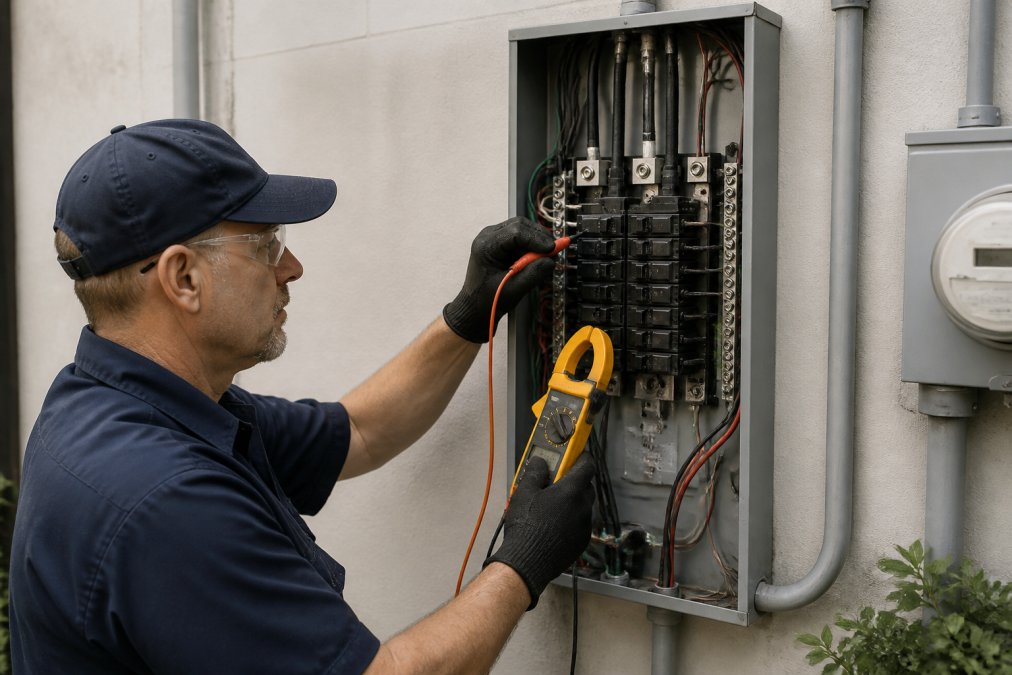
Your swim spa’s specification sheet lists the exact amperage required. The manufacturer provides load calculations based on heater wattage, pump motor size, control system power draw, and jet system requirements. A licensed electrician can verify these calculations and ensure your home’s panel has capacity.
Dedicated Circuit for Swim Spa Installation
Your swim spa must have its own dedicated circuit, a breaker and wiring used only for the spa. A shared circuit creates safety risks: when the heater draws heavy current, voltage drops if other appliances run simultaneously, causing equipment malfunction or overheating.
Swim Spa GFCI Breaker Requirements and Protection
A GFCI (Ground Fault Circuit Interrupter) detects electrical faults and cuts power in milliseconds.
Why GFCI Protection Is Non-Negotiable
A GFCI breaker monitors for ground faults, situations where electricity leaks to ground through water or wet skin, and trips instantly if a fault occurs. Building codes mandate GFCI protection for all swim spas, indoors or outdoors. A standard breaker only responds to overcurrent; a GFCI breaker protects against both overload and ground faults.
GFCI Disconnect Switch Placement and Distance
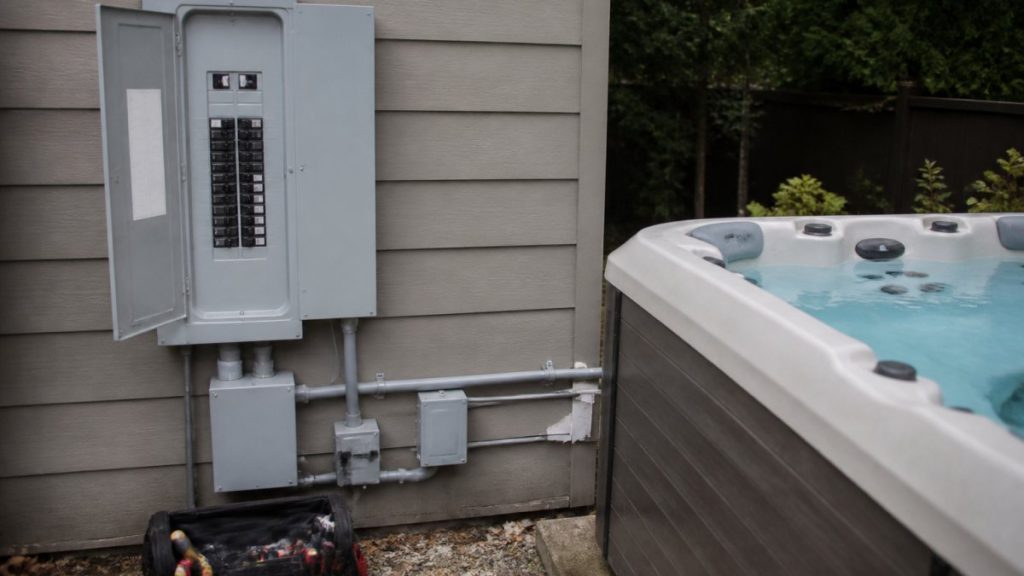
The disconnect switch is a manual shutoff located within sight of the spa (typically no more than 50 feet away) and must be accessible and clearly labeled. This allows immediate power shutoff in emergencies and enables service technicians to safely work on the spa.
NEC Electrical Code for Outdoor Spas and Swim Spas
The National Electrical Code (NEC) sets standards for spa installations to prevent electrocution and fires.
The 5-Foot Rule and Outlet Placement
The NEC establishes a 5-foot safety zone around your spa where no standard outlets can be installed. Water conducts electricity, creating shock hazard if outlets are too close. Lighting fixtures and cord-connected equipment within 5 feet must be GFCI protected. Check your local building department for stricter requirements.
Wire Gauge, Conduit, and Grounding Requirements
For a 50-amp circuit, use 6 AWG copper wire or 8 AWG aluminum wire; undersized wire creates dangerous heat. Wire must run through protective conduit. Grounding connects the spa’s metal frame to earth ground, providing a safe path for fault current. A bonding wire connects all metal parts together, ensuring no voltage difference between surfaces.
Assessing Your Home’s Electrical Panel Capacity
Before installation, a licensed electrician must evaluate your electrical panel to confirm it has sufficient capacity, preventing costly mid-installation upgrades.
Understanding Your Panel’s Total Amperage Rating
Your panel’s total amperage rating (typically 100, 150, or 200 amps) is displayed on the main breaker at the top. Homes built before 1990 commonly have 100A service; newer homes typically have 150A or 200A.
Calculating Available Capacity: A Step-by-Step Checklist
List all existing circuits and their amperage ratings (kitchen, bathroom, laundry, dryer, water heater, HVAC, electric range, and other dedicated circuits). A licensed electrician applies NEC Article 220 demand factor calculations to determine actual load, then subtracts from your panel’s main rating to find available capacity.
When a Panel Upgrade Is Necessary
Panel upgrades are common in older homes or homes with electric heating and air conditioning. A panel upgrade involves installing a new main breaker (typically 150A or 200A), running larger service entrance wire, and potentially upgrading the meter. Panel upgrades typically cost $1,500 to $3,000 and are necessary for safety and code compliance.
Red Flags: When to Call a Licensed Electrician Immediately
Call a licensed electrician immediately if your breaker panel is warm or has scorch marks, you have a 60-amp or smaller main breaker, your panel uses FPE or Zinsco breakers (documented fire risk), or you’re unsure about any calculation. An electrician can assess your panel in 30 minutes and provide a written capacity report.
Hard-Wired Installation vs. Plug-and-Play Connections
Swim spa electrical connections fall into two categories, and the choice is determined by your spa’s power requirements, not your preference. Understanding the difference prevents costly mistakes and warranty voidance.
Plug-and-Play Spas: Power Limitations and Real-World Constraints
Some portable swim spas plug into standard household outlets. These are marketed as “plug-and-play” or “no electrician needed.” The appeal is obvious: no permits, no installation costs, no licensed electrician required.
What plug-and-play actually means:
- The spa uses a standard 120-volt outlet (the same outlet your microwave uses)
- The spa draws 15 amps or less (the limit of a standard household circuit)
- Total power available: approximately 1,800 watts
What you get with 1,800 watts:
- A small heater (typically 1-2 kW), which means slow water heating, often 8-12 hours to reach 104°F from cold
- Low-power jets that provide minimal massage effect
- Limited pump capacity, so water circulation and filtration are slow
- No ability to run the heater and jets simultaneously at full power
Hard-Wired Installation: The True Swim Spa Standard
True swim spas, those with powerful swim jets, fast heating, and full-featured controls, require hard-wired connections. This means permanent wiring from your electrical panel directly to the spa.
What hard-wired means:
- The spa connects to a 240-volt dedicated circuit (twice the voltage of standard outlets)
- A 50-amp breaker supplies the circuit (versus 15 amps for a standard outlet)
- Total power available: approximately 12,000 watts
- The connection is permanent; there is no plug or cord
What you get with 12,000 watts:
- A powerful heater (5-6 kW) that heats water in 2-4 hours
- Swim jets capable of generating 1-2 mph current for actual lap swimming
- Ability to run heater, jets, and circulation pump simultaneously at full power
- Advanced controls, multiple jet zones, and variable speed options
Installation requirements:
- Dedicated circuit from the breaker panel to a disconnect switch near the spa
- Conduit protecting all wiring
- GFCI breaker protection
- Building permit and inspection
- Licensed electrician (required by code)
The Decision Framework: How to Know Which Type You Need
Choose plug-and-play only if:
- You want a portable unit you can move or remove
- Your budget is under $5,000 for the entire spa
- You prioritize convenience over performance
- You understand you’re buying a hot tub, not a swim spa
- You have a standard 120-volt outlet available near where you’ll place the unit
Choose hard-wired only if:
- You want a true swim spa with functional swim jets
- You plan to keep the spa in one location permanently
- You’re willing to invest in electrical installation ($2,000-$5,000 for the electrical work alone)
- You want fast heating and full power for all features simultaneously
- You have or can afford a panel upgrade if needed
Manufacturer Specifications: The Definitive Answer
Don’t rely on marketing language. Check your spa’s specification sheet for the electrical requirements for swim spa installation under “Electrical Requirements” or “Power Requirements.” The manufacturer will state:
- Voltage: 120V, 240V, or both
- Amperage: 15A, 20A, 30A, 50A, or 60A
- Connection type: “Plug-in” or “Hard-wired”
- Wire gauge and breaker size if hard-wired
Cost Comparison: Plug-and-Play vs. Hard-Wired
Plug-and-play spa total cost:
- Spa unit: $3,000-$8,000
- Electrical work: $0 (you do it yourself)
- Permits: $0
- Total: $3,000-$8,000
Hard-wired swim spa total cost:
- Spa unit: $8,000-$25,000+
- Electrical work (no panel upgrade needed): $2,000-$4,000
- Electrical work (panel upgrade required): $4,000-$8,000
- Permits and inspections: $200-$500
- Total: $10,200-$33,500+
The electrical cost is real, but it’s an investment in safety, performance, and longevity. A hard-wired spa will operate reliably for 10-15 years. A plug-and-play unit often fails within 3-5 years due to power limitations and component stress.
Permits, Inspections, and Working with Licensed Electricians
Electrical work on swim spas requires permits. Your local building department issues permits. They ensure work meets code and gets inspected.
| Step | What Happens | Who Does It |
|---|---|---|
| 1. Assessment | Electrician evaluates panel capacity and wiring needs | Licensed electrician |
| 2. Permit | Building department issues work permit | Building department |
| 3. Installation | Electrician installs breaker, wire, conduit, and disconnect | Licensed electrician |
| 4. Inspection | Building inspector verifies code compliance | Building inspector |
| 5. Approval | Permit is signed off; spa can operate | Building department |
Frequently Asked Questions
Do I need a dedicated circuit for my swim spa?
Yes, a dedicated circuit is required for swim spa installation. This circuit must serve only the swim spa and cannot be shared with other appliances or equipment. A dedicated circuit ensures the swim spa receives consistent, uninterrupted power and prevents breaker trips from other loads. Most swim spas require a 50-amp dedicated circuit at 240 volts, though some models may differ. Check your swim spa’s specification sheet to confirm the exact requirements.
What is the NEC 5-foot rule for swim spas?
The National Electrical Code (NEC) establishes a 5-foot minimum distance rule for electrical outlets and certain equipment around swim spas and hot tubs. No standard outlet, GFCI receptacle, or other electrical equipment can be located within 5 feet of the water’s edge, measured horizontally. A GFCI disconnect switch must be installed between 5 and 15 feet from the swim spa, within sight of the equipment. This rule protects against electrical shock hazards and ensures safe access to emergency shutoff controls.
Why is GFCI protection required for swim spas?
GFCI (Ground Fault Circuit Interrupter) protection is essential for swim spas because water is a conductor of electricity. A GFCI breaker detects ground faults, unintended electrical paths to ground, and cuts power in milliseconds, preventing electrical shock. The NEC requires GFCI protection for all circuits serving swim spas and any outlets within 20 feet of the water. A GFCI disconnect switch provides both protection and a convenient way to safely shut down the swim spa for maintenance or emergencies.
Can a swim spa run on a 30-amp breaker?
Most swim spas cannot safely run on a 30-amp breaker. The majority of residential swim spas require a 50-amp breaker at 240 volts to handle their heating and pump motors. A 30-amp circuit provides insufficient amperage and will cause frequent breaker trips, overheating, and potential damage to equipment. Some smaller, portable swim spas may operate on 30 amps, but check your unit’s specification sheet to confirm. If your current panel capacity is limited, a licensed electrician can assess whether a sub-panel or panel upgrade is necessary.