
Table of Contents
- Cox Electric vs Dynamic Electrical: Head-to-Head Comparison
- Service Scope: Residential Electrical Services and Commercial Capabilities
- Licensing, Insurance, and Credentials: How to Vet a Licensed Electrician
- Cost Transparency and Pricing Models
- Questions to Ask Electrical Contractors Before Hiring
- Emergency Response, Troubleshooting, and Repair Services
- Which Contractor Should You Choose?
- Frequently Asked Questions
Last Updated: September 27, 2026
Cox Electric vs Dynamic Electrical: Head-to-Head Comparison
When you need electrical work done right, choosing between service providers like Cox Electric vs Dynamic Electrical matters. Cox Electric and Dynamic Electrical both serve residential and commercial clients in the area, but they differ significantly in scope, credentials, and how they approach complex projects. This comparison cuts through the marketing to show you exactly what each brings to the table.
Service Scope: Residential Electrical Services and Commercial Capabilities
For EV charger installation, generator backup systems, or solar integration, projects demanding careful design and code compliance, Cox Electric’s system modernization focus aligns better. Dynamic Electrical excels at urgent repairs while you arrange comprehensive work.
Licensing, Insurance, and Credentials: How to Vet a Licensed Electrician
Verifying credentials is non-negotiable. Here’s how to separate professionals from unlicensed operators.
Understanding Electrical Licensing Tiers
Electricians operate under three license levels: apprentice (in training, supervised work), journeyman (4-5 years apprenticeship, passed state exam), and master (additional experience, can design systems and pull permits independently). Panel upgrades and system design require a master electrician or journeyman under master supervision. The contractor should specify which license tier will perform your work.
How to Verify Credentials
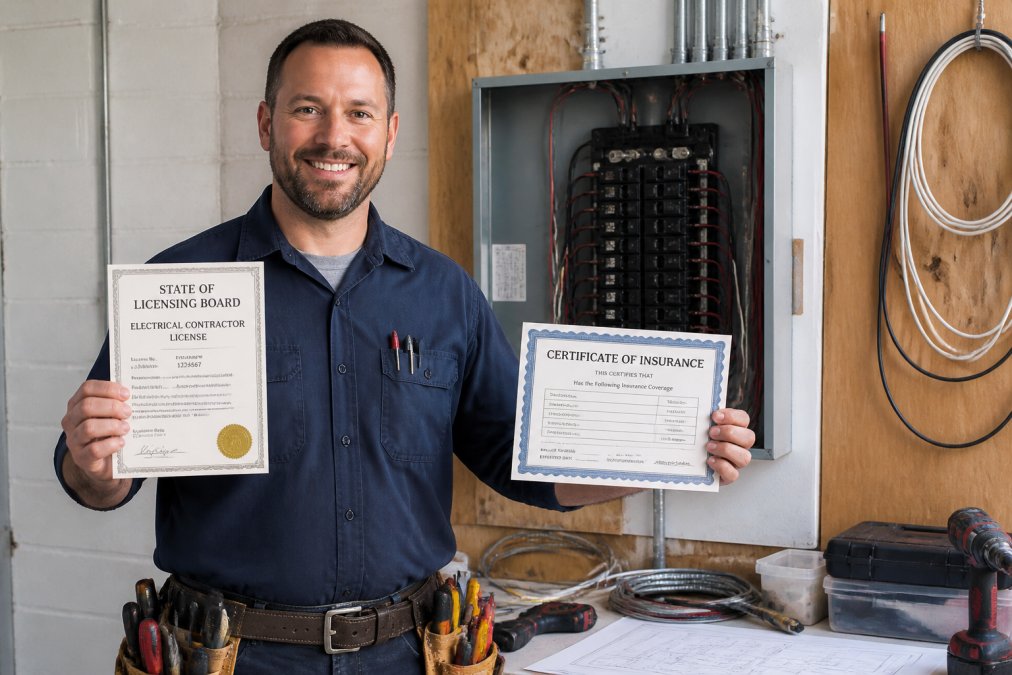
Ask for the individual electrician’s personal license number (not the company’s general license). Verify it through your state’s licensing board website (Department of Labor, Professional Regulation, or equivalent). Confirm the license is current, check the license type, review any disciplinary history, and verify it’s in good standing.
Ask for a certificate of insurance naming your address as additional insured. Call the insurance company directly to confirm the policy is active. General liability should cover at least $1 million per occurrence; workers’ compensation is required if they have employees.
Red Flags That Signal Risk
Contractors who hesitate to provide license numbers, claim “the license is in the truck,” or say they don’t need a license are red flags. Unlicensed electrical work voids homeowner insurance, creates fire hazards, and fails inspection at sale. Hiring an unlicensed contractor is illegal in most jurisdictions and exposes you to liability.
Another red flag: a contractor who won’t pull permits. Permits ensure code compliance through inspection. If a contractor suggests skipping permits to save money, they cut corners elsewhere too.
What to Ask About Endorsements and Specializations
Some states issue endorsements for solar installation, EV charger installation, or generator work. If you’re planning work in those areas, verify the endorsement exists and that the contractor has met specific training and testing requirements.
The Verification Checklist
Before signing a contract, verify: license number through your state board, certificate of insurance with your address as additional insured, workers’ compensation confirmation, which license tier will perform the work, proof permits will be pulled and inspections scheduled, and any relevant endorsements. Strong contractors expect you to check. If a company resists transparency, call someone else.
Cost Transparency and Pricing Models
Costs depend on scope, panel size, code requirements, and existing infrastructure. Understanding typical costs for common projects helps you evaluate quotes.
How Electrical Contractors Price Work
Cox Electric uses project-based pricing: consultation, assessment, and full-scope quote upfront. This works well for major projects like panel replacements where scope is clearly defined.
Dynamic Electrical operates on a service-call basis: diagnostic fee ($75-$150), then hourly labor ($75-$150/hour) or flat rates for common repairs. This suits quick fixes but creates uncertainty if the problem’s scope isn’t clear upfront.
Typical Costs for Common Electrical Work
Knowing ballpark figures helps you spot quotes that are outliers. These ranges reflect typical costs for common residential electrical projects:
- Outlet or switch replacement: $100-$250 per outlet, including labor and materials
- Breaker replacement: $150-$300 per breaker, depending on panel accessibility
- Light fixture installation: $200-$500 per fixture, including labor and wiring
- Ceiling fan installation: $300-$600 if existing wiring is in place; $600-$1,200 if new wiring is needed
- 240-volt circuit installation (for appliances like ranges, dryers, or EV chargers): $800-$2,000 depending on distance from panel and existing infrastructure
- Electrical panel upgrade (100-amp to 200-amp): $3,000-$6,000 including labor, materials, permits, and inspection
- Full home rewiring (for older homes with outdated systems): $8,000-$15,000+ depending on square footage and complexity
- Generator installation: $3,000-$8,000 depending on generator size and whether new circuits are required
These ranges assume standard residential work in typical conditions. Older homes with plaster walls, limited attic access, or outdated infrastructure cost more because running new wire is more labor-intensive. New construction or homes with accessible attics and modern framing cost less.
Understanding the Difference Between Hourly and Flat-Rate Pricing
Hourly billing protects contractors if unexpected problems emerge; flat-rate pricing protects you with upfront costs. For routine repairs with clear scope, flat-rate makes sense. For complex diagnostics or system upgrades where problems might emerge, hourly billing is more realistic. A contractor quoting a flat rate for a panel upgrade in a 60-year-old home without inspection is either inexperienced or lowballing.
How to Request and Compare Estimates
Ask: Do you charge for diagnostics? How do you calculate labor? Are parts marked up? Do you provide written estimates before starting? What happens if additional problems emerge? What’s your payment policy? Do you warranty parts or labor?
Request written estimates from at least three contractors. If one quote is significantly lower, ask why, it might reflect efficiency or corner-cutting.
Red Flags in Pricing
Contractors who won’t provide written estimates before work begins are disorganized or deliberately vague. If a quote is dramatically lower than competitors, ask what’s included, lower-quality materials, reduced scope, or planned upsells? Also watch for deposits exceeding 50% of total cost. Standard practice is a deposit to cover materials, with balance due upon completion.
Request estimates from multiple contractors for the same project. You’ll quickly see which companies are pricing fairly and which are outliers. Three quotes gives you a solid sense of the market rate for your specific work. When comparing estimates, make sure they’re quoting the same scope, same materials, same labor timeline, same warranty terms. An apples-to-apples comparison reveals which contractor offers the best value.
Transparency as a Competitive Advantage
Strong Tower Solar Electrical Services & Generators LLC offers free estimates precisely because we believe you should understand costs before committing. That’s the standard you should expect from any contractor worth hiring. A contractor who’s confident in their work and pricing will walk you through the estimate line by line, explain why certain materials or labor costs what they do, and answer questions without defensiveness. That transparency is how you build confidence in the decision.
Questions to Ask Electrical Contractors Before Hiring
Beyond licensing and insurance, dig deeper. These questions reveal how a contractor thinks about your project and whether they’re worth your trust.
On the technical side:
- What’s your experience with projects like mine? Can you share examples or references?
- How will you ensure the work meets current electrical code?
- What’s your timeline, how long will this take, and when can you start?
- Will you handle permitting and inspections, or is that my responsibility?
On the practical side:
- How will you protect my home during the work, flooring, walls, existing systems?
- What happens if you discover additional problems once work starts? How do we handle scope changes?
- Do you guarantee your work, and for how long?
- What’s your process if something goes wrong after completion?
On the relationship side:
- How do you communicate progress, daily updates, weekly check-ins?
- Who’s my point of contact if I have questions during the job?
- How do you handle customer concerns or complaints?
Contractors who answer these questions clearly and confidently are professionals. Those who get defensive or vague are showing you who they are, believe them.
Emergency Response, Troubleshooting, and Repair Services
For troubleshooting, the right contractor walks you through what went wrong and why, so you understand the problem. A quick explanation beats a vague “it was the breaker” every time.
Preventative maintenance matters too. Regular electrical inspections catch problems before they become emergencies. Aging wiring, overloaded circuits, and corroded connections are all discoverable before they cause fires or outages.
Which Contractor Should You Choose?
The honest answer: the best contractor is the one who listens to your specific situation, provides a clear estimate, proves their credentials, and communicates throughout the job.
Strong Tower Solar Electrical Services & Generators LLC brings a different advantage to the table. We combine Cox Electric’s system-design expertise with the responsiveness you’d want from any contractor.
Frequently Asked Questions
What should I look for when comparing Cox Electric vs Dynamic Electrical?
Focus on three core areas: licensing and insurance verification, service scope (residential vs commercial capabilities), and cost transparency. Ask each contractor for proof of current licensing, liability insurance, and worker’s compensation coverage. Request detailed written estimates that break down labor and materials. Check their response time for emergency calls and whether they offer preventative maintenance programs. Contractors may differ in their specializations and availability.
How do I verify the credentials of an electrical service provider?
Request a copy of their current electrical license and liability insurance certificate before work begins. You can verify licensure through your state’s licensing board or contractor database. Ask how long they’ve been in business and whether they’re bonded. Check online reviews on Google, the Better Business Bureau, and Yelp for patterns in customer feedback. Don’t rely solely on review count, read recent reviews for details about code compliance, follow-up service, and professionalism. A licensed electrician should have no problem providing this documentation immediately.
What is the difference between residential and commercial electrical services?
Residential electrical work covers home installations, repairs, and upgrades like panel replacements, outlet installation, EV charger setup, and troubleshooting. Commercial electrical services handle larger facilities, higher voltage systems, and complex wiring for businesses and light industrial properties. Commercial projects often require knowledge of building codes specific to commercial structures and larger-scale power distribution. When comparing contractors, ask whether they hold both residential and commercial licenses if you need either service, as some electricians specialize in only one area.
Should I get multiple quotes before hiring an electrician?
Yes. Obtain written estimates from at least two contractors to compare pricing, scope of work, and timeline. A detailed estimate should itemize labor costs, materials, permits, and inspection fees. Be wary of estimates that are significantly lower than others, this may indicate corners being cut or hidden costs later. Ask each contractor to explain their pricing methodology and whether they include warranty or follow-up service. The lowest price isn’t always the best value; prioritize contractors who provide clear documentation and stand behind their work.