
Table of Contents
- Solar Panel Installation Cost Breakdown for 2026
- Factors Influencing Your Solar Installation Price
- Federal Solar Tax Credit 2026 and Incentives
- Average Solar System Size for Residential Home
- Cost of Solar Battery Backup Systems
- Long-Term Savings and Return on Investment
- Post-Installation Maintenance and Hidden Costs
- Professional Installation vs. DIY: Cost and Risk Comparison
- Frequently Asked Questions
Last Updated: September 21, 2026
Solar Panel Installation Cost Breakdown for 2026
The total cost of residential solar panel installation 2026 typically breaks down into three major components: equipment, labor, and permitting. Understanding each piece helps you anticipate what you’ll actually pay when you call a solar installer.
Equipment Costs: Panels, Inverters, and Mounting Hardware
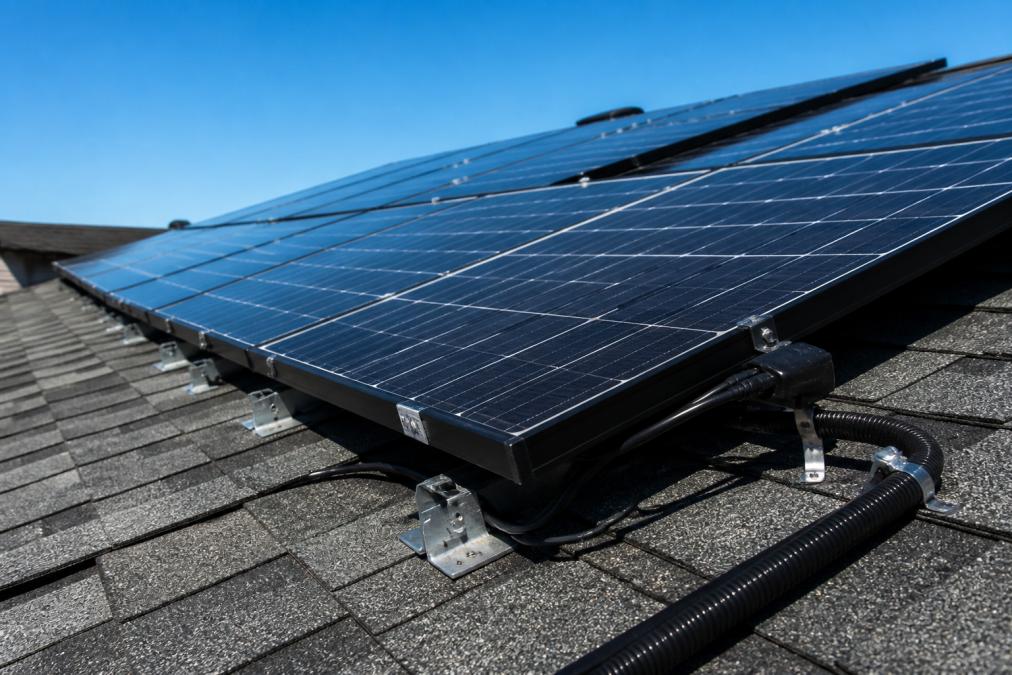
Solar panels come in two main types: monocrystalline panels, which deliver higher efficiency in smaller spaces, and polycrystalline panels, which cost less upfront but require more roof area. The inverter efficiency directly impacts how much usable electricity you generate from your panels.
Labor and Installation Fees
Professional installation typically accounts for 10-15% of total system cost. Licensed electricians handle the wiring, electrical panel connections, and safety inspections required by code. The installation timeline usually spans 1-3 days depending on system size and roof complexity.
Permitting and Interconnection Costs
Permitting fees vary by jurisdiction but typically range from a few hundred to a few thousand dollars. Your local building department requires inspections to confirm the system meets electrical code and structural standards. Some municipalities charge based on system capacity; others use flat fees.
Factors Influencing Your Solar Installation Price
Several variables shift the total cost of residential solar panel installation 2026 significantly. System size, roof condition, and electrical complexity are the primary drivers. Geographic location also matters: labor rates, permitting timelines, and incentive availability differ widely.
System Size and Energy Consumption
Your kilowatt-hour consumption determines system capacity. A typical residential home uses 10,000-15,000 kWh annually, requiring a 6-10 kW system. Homes with electric heating, cooling, or EV charging need larger systems, sometimes 12-15 kW or more.
Roof Condition, Orientation, and Shading
Roof age and condition affect installation cost. A roof nearing the end of its lifespan should be replaced before solar installation, removing and reinstalling panels later is expensive. South-facing roofs with minimal shading receive maximum peak sun hours and deliver better returns.
Electrical Panel Upgrades and Complexity
Homes built in the 1980s or earlier often have 100-amp electrical panels, which may be undersized for modern loads. Adding solar plus an EV charger can trigger a 200-amp panel upgrade, a $1,500-3,000 expense that gets added to your solar project cost.
Federal Solar Tax Credit 2026 and Incentives
The federal investment tax credit remains a major incentive for residential solar. This tax credit reduces your federal income tax liability dollar-for-dollar based on your total system cost, making solar significantly more affordable for most homeowners.
Investment Tax Credit Eligibility
The federal investment tax credit currently allows you to deduct a percentage of your system’s total installed cost from your federal income taxes. Eligibility requires that you own the system (not lease it) and that the system powers a primary residence.
State Rebates and Local Incentives
Many states offer additional rebates, tax credits, or performance-based incentives beyond the federal credit. Some utilities provide rebates for battery storage systems or demand response capabilities. Local incentive programs vary by municipality and change frequently.
Average Solar System Size for Residential Home
Most residential systems fall into a predictable range based on regional climate and household consumption patterns. Understanding typical system sizing helps you benchmark quotes and avoid over- or under-sizing.
Kilowatt-Hour Needs and System Capacity
A home consuming 12,000 kWh annually in a moderate-sun region typically needs a 7-9 kW system to offset 100% of consumption. Homes in sunnier regions (Arizona, California, Florida) can use smaller systems due to higher peak sun hours. Cloudier regions (Pacific Northwest, Northeast) need larger systems to generate the same annual output.
Cost Per Watt and Total Installed Cost
Cost per watt is a useful metric for comparing quotes. This figure divides your total system cost by the system’s capacity in watts. A lower cost per watt doesn’t always mean better value, it may reflect lower-quality equipment or less rigorous installation.
Cost of Solar Battery Backup Systems
Adding battery storage transforms your solar system from grid-tied to hybrid, enabling power during outages and optimizing self-consumption. Battery costs have declined significantly, but they remain a substantial investment.
Battery Storage Pricing and Capacity Options
Battery capacity is measured in kilowatt-hours (kWh). A 10 kWh battery provides roughly 8-10 hours of backup power for essential loads during an outage. Larger batteries (15-20 kWh) support whole-home backup but cost proportionally more.
Grid-Tied vs. Off-Grid System Costs
A grid-tied system without battery backup is the most affordable option. You export excess power to the grid, which credits your account through net metering. During outages, the system shuts down for safety reasons.
Battery warranties typically cover 10 years and guarantee 70-80% capacity retention. Plan for battery replacement around year 10-15, depending on cycling patterns and warranty terms.
Long-Term Savings and Return on Investment
Solar’s financial case depends on your utility rates, available incentives, and system costs. Most homeowners recoup their investment within 6-10 years through reduced electricity bills.
Payback Period and Levelized Cost of Energy
Your payback period is the time required for cumulative savings to equal your net system cost (after incentives). A system costing $20,000 after the federal tax credit that saves $2,500 annually has an 8-year payback period.
Net Metering and Utility Rate Savings
Net metering allows you to bank excess power you generate during peak sun hours and draw it back at night or during cloudy periods. This dramatically improves system economics by letting you use your solar production whenever you need it, rather than only when the sun shines.
Post-Installation Maintenance and Hidden Costs
Solar systems require minimal maintenance, but some upkeep ensures optimal performance. Understanding these costs prevents surprises and keeps your system running efficiently for decades.
Annual Maintenance and Warranty Coverage
Most residential systems need cleaning 1-2 times annually to remove dust, pollen, and debris. Professional cleaning typically costs $150-300 per visit. In dusty or coastal environments, more frequent cleaning may be warranted.
Inverter Efficiency and Equipment Replacement
Inverter efficiency typically ranges from 95-98%, meaning 2-5% of your DC power is lost in conversion to AC. Higher-quality inverters maintain efficiency across a wider range of operating conditions.
Inverter failures are the most common equipment issue in residential solar systems. Without warranty coverage, replacement can be expensive. Verify warranty terms, some manufacturers offer 10-year coverage; others extend to 25 years for an additional fee.
Professional Installation vs. DIY: Cost and Risk Comparison
Some homeowners consider DIY installation to reduce costs. This approach carries significant risks that often outweigh the savings.
DIY installation risks include:
- Electrical code violations that fail inspection and delay interconnection
- Safety hazards from improper grounding or wiring
- Voided manufacturer warranties if installation isn’t performed to spec
- Inability to claim the federal tax credit if the IRS questions installation quality
- Personal liability if the system causes property damage or injury
| Comparison Factor | Professional Installation | DIY Installation |
|---|---|---|
| Code Compliance | Guaranteed | At risk |
| Warranty Coverage | Full manufacturer coverage | Often voided |
| Tax Credit Eligibility | Secure | Questionable |
| Insurance Protection | Yes | No |
| Timeline | 1-3 days | Weeks to months |
| Troubleshooting | Professional support included | Self-diagnosis required |
Frequently Asked Questions
What is the average cost of residential solar panel installation in 2026?
The total installed cost for a residential solar panel system varies based on system size, equipment quality, and local labor rates. Most homeowners should expect costs to reflect current market pricing for photovoltaic systems, equipment, and professional installation labor. Since pricing depends on your specific energy needs, roof condition, and location, requesting a free estimate from a licensed installer will provide an accurate quote for your home.
How much can I save with the federal solar tax credit in 2026?
The federal investment tax credit allows eligible homeowners to deduct a percentage of their total installed cost from their federal income taxes. To qualify, your system must be installed at your primary or secondary residence, and you must own the system outright. The credit applies to the full cost of equipment, labor, and permitting. Consult a tax professional to confirm your eligibility and calculate your specific tax benefit.
What is the average solar system size for a residential home?
Most residential homes require a system between 5 and 10 kilowatts of capacity, though this depends on your annual energy consumption measured in kilowatt-hours. A typical home using 10,000-12,000 kilowatt-hours per year might need a 7-8 kilowatt system. Factors like roof orientation, peak sun hours in your location, and shading from trees or structures affect the required system capacity. A professional energy audit will determine the right size for your home.
Should I add battery storage, and what does it cost?
Battery storage lets you store excess energy for use during outages or at night, providing energy independence. However, battery systems add significant cost to your installation. The price depends on capacity measured in kilowatt-hours and the type of battery technology. Grid-tied systems without batteries are less expensive but don’t provide backup power, while off-grid systems with batteries offer greater resilience but higher upfront investment. Your installer can model both scenarios to show the cost and benefit difference.
What hidden costs should I expect after solar installation?
Post-installation expenses include annual maintenance, inverter efficiency monitoring, and eventual equipment replacement. Most systems require minimal maintenance, but inverters typically need replacement after 10-15 years. Warranty coverage varies by manufacturer and installer, so review terms carefully. Some homeowners also face electrical panel upgrades if their existing panel can’t handle the new system safely. Budget for these long-term costs when calculating your return on investment.
Why does my solar installation cost differ from my neighbor’s?
Installation costs vary based on system size, roof condition, shading analysis results, electrical complexity, and local labor rates. If your home has an older electrical panel or requires upgrades for safety and code compliance, costs increase. Roof age, pitch, and orientation affect installation difficulty. Equipment choices, monocrystalline versus polycrystalline panels, inverter type, and mounting hardware, also impact price. A detailed site assessment reveals which factors affect your specific quote.
Is professional installation worth the cost, or should I consider DIY?
Professional installation ensures your system meets electrical codes, integrates safely with your home’s electrical panel, and qualifies for incentives like the federal tax credit. Licensed installers carry insurance and warranties, protecting you from liability if something fails. DIY installation risks code violations, system damage, electrical hazards, and potential loss of tax credits. Given the complexity of permitting, interconnection with the grid, and electrical safety, professional installation is strongly recommended for most homeowners.