
Table of Contents
- How to Wire a Swimming Pool: Safety and Code Requirements
- What You’ll Need Before Starting
- Understanding Pool Pump Wiring Fundamentals
- Pool Bonding and Grounding: Essential Protection
- GFCI Protection for Pool Equipment Installation
- Obtaining an Austin Pool Electrical Permit
- Common Mistakes to Avoid
- When to Call a Licensed Electrician
- Frequently Asked Questions
Last Updated: October 15, 2026
How to Wire a Swimming Pool: Safety and Code Requirements
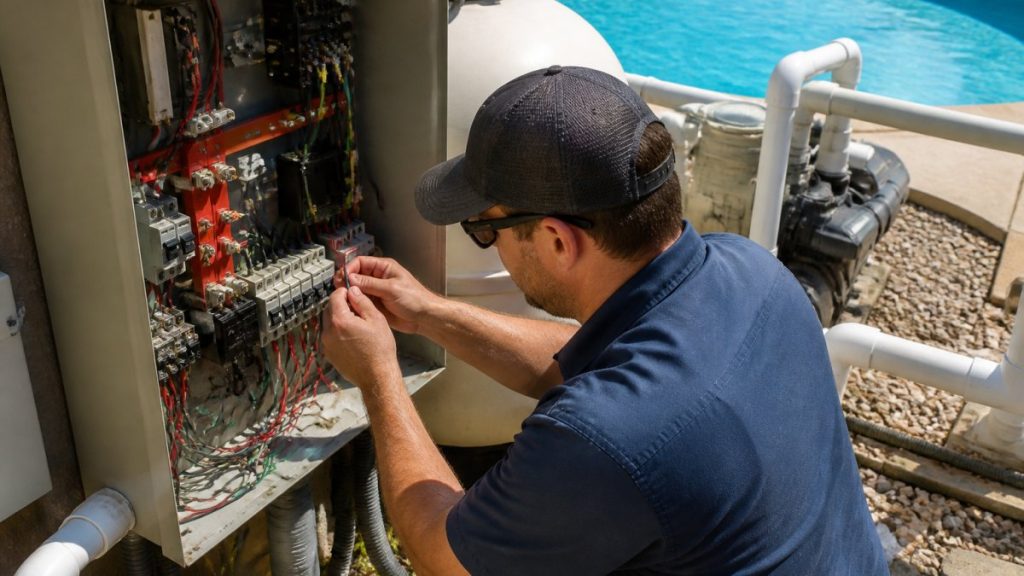
How to wire swimming pool systems requires careful attention to safety codes and electrical standards. Pool electrical systems are not DIY projects; they demand precision, knowledge of local codes, and proper permitting. This guide covers what you need to know before attempting pool wiring work.
Why Professional Installation Matters
Improper pool wiring creates serious hazards. Water conducts electricity, making faulty connections potentially fatal. A single mistake can electrocute swimmers or damage expensive equipment.
Licensed electricians follow strict safety protocols. They understand how to:
- Size wires correctly for pool equipment
- Install proper grounding and bonding
- Protect circuits with GFCI devices
- Meet all local electrical codes
Strong Tower Solar Electrical Services & Generators LLC has master electricians on staff. We ensure every connection is safe and code-compliant from day one.
What You’ll Need Before Starting
Electrical Equipment and Materials
Proper materials are essential for safe pool wiring. You’ll need:
- Copper wire in the correct gauge (typically 8 AWG to 2 AWG depending on pump size)
- Conduit to protect wires from physical damage and UV exposure
- Circuit breaker rated for your specific pump amperage
- GFCI breaker or outlet for shock protection
- Bonding wire (typically 8 AWG copper) to connect metal parts
- Grounding rod and grounding wire for system grounding
- Disconnect switch to safely isolate the pump from power
- Junction boxes rated for outdoor use
- Weatherproof connectors and fittings
All materials must be UL-listed and rated for wet, outdoor environments.
Tools Required
You’ll need specific tools to complete pool wiring work:
- Wire strippers and crimpers
- Voltage tester (essential for safety)
- Screwdrivers (Phillips and flathead)
- Adjustable wrench
- Hacksaw for cutting conduit
- Fish tape for pulling wires through conduit
- Multimeter to test continuity
- Hammer and chisel (for grounding rod installation)
- Tape measure
- Wire nuts and connectors rated for outdoor use
Don’t skip the voltage tester, it’s your most important safety tool.
Understanding Pool Pump Wiring Fundamentals
Single-Speed vs. Variable-Speed Pumps
Single-speed pumps run at one fixed speed and draw consistent current. They’re simpler to wire but less energy-efficient. Most single-speed pumps require a dedicated 240-volt circuit.
Variable-speed pumps adjust their speed based on pool needs. They draw less power at lower speeds, reducing energy costs significantly. Variable-speed pumps still need proper wiring but offer long-term savings through reduced electricity consumption.
Both pump types require the same bonding, grounding, and GFCI protection. The main difference is circuit sizing, variable-speed pumps typically draw less amperage than single-speed models.
Circuit Breaker and Wire Sizing
Wire gauge and breaker size must match your pump’s amperage rating. Here’s the basic principle: undersized wire creates heat and fire hazard. Oversized wire wastes money but is safer than undersized wire.
Check your pump’s nameplate for full-load amperage. Add 25% to that number to determine the correct breaker size and wire gauge. For example:
- 15-amp pump = 19-amp breaker (next standard size up)
- 20-amp pump = 25-amp breaker
- 30-amp pump = 40-amp breaker
Wire gauge depends on distance from breaker to pump. Longer runs require thicker wire to compensate for voltage drop. Consult the National Electrical Code (NEC) Table 310.15(B)(2)(a) for exact sizing based on distance and amperage.
Pool Bonding and Grounding: Essential Protection
Bonding and grounding protect swimmers from electrical shock. These two systems work together to create a safe pool environment.
Bonding connects all metal components to a common point, ensuring they’re at the same electrical potential. Grounding connects the electrical system to the earth, providing a safe path for fault currents.
Bonding Metal Components
All metal parts near the pool must be bonded together. This includes:
- Pump and motor housings
- Filter equipment
- Ladders and handrails
- Metal deck fittings
- Light fixtures and niche components
- Any metal within 5 feet of the pool water
Use 8 AWG copper wire to bond these components. Run the bonding wire to a common bonding point, typically at the equipment pad. The bonding wire must be continuous, no splices allowed in the bonding conductor.
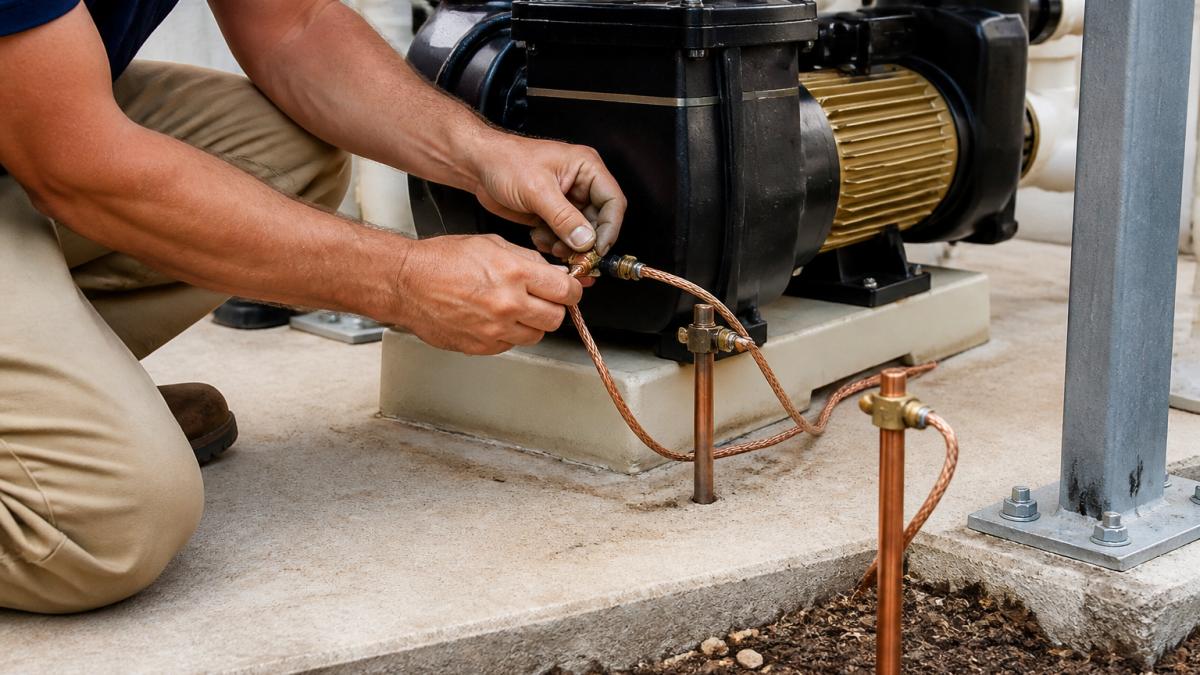
Check local electrical codes for specific bonding requirements. Some jurisdictions have stricter rules than others.
Grounding the System
Grounding provides a safe path for fault currents to reach the earth. Install a ground rod at least 8 feet long, driven into the ground near the equipment pad. Copper rods work best because they resist corrosion.
Connect the grounding rod to the equipment grounding conductor using 8 AWG copper wire. This wire must be continuous from the breaker to the ground rod. No splices are permitted in the main grounding conductor.
Test grounding resistance with a ground resistance tester. Resistance should be below 25 ohms. If resistance is higher, install a second ground rod and connect it to the first with a bonding jumper.
GFCI Protection for Pool Equipment Installation
GFCI (Ground Fault Circuit Interrupter) devices are non-negotiable for pool safety. They detect small current leaks and shut off power in milliseconds, preventing electrocution.
Why GFCI Protection Is Non-Negotiable
GFCI protection is required by the National Electrical Code for all pool equipment circuits. A GFCI breaker monitors current flow constantly. If it detects an imbalance between the hot and neutral conductors, it trips instantly.
This protection is critical because water conducts electricity. Even a small fault current can be deadly. GFCI devices have saved countless lives since their introduction.
Install GFCI protection at the breaker panel, not at individual outlets. A GFCI breaker protects the entire circuit, whereas outlet-level GFCI protection only protects devices downstream.
Placement and Testing
Mount the GFCI breaker in the main electrical panel. Label it clearly as “Pool Equipment.” Test the GFCI breaker monthly by pressing the “Test” button. The breaker should trip immediately.
If the breaker doesn’t trip when tested, have a licensed electrician inspect it. A faulty GFCI breaker is a serious safety hazard.
A GFCI breaker that won’t trip when tested is a critical failure. Do not operate pool equipment until the breaker is replaced. Faulty GFCI protection can result in electrocution.
Obtaining an Austin Pool Electrical Permit
Austin requires permits for all pool electrical work. Working without a permit exposes you to fines and creates liability issues. Permitted work is inspected and certified as safe.
Permit Application Process
Contact your local Development Services to apply for a pool electrical permit. You’ll need:
- Completed permit application form
- Detailed electrical plans showing all wiring, bonding, and grounding
- Equipment specifications (pump, motor, filter ratings)
- Proof of contractor licensing (if hiring a professional)
- Site plan showing pool location and equipment placement
Submit these documents to the permit office. Processing typically takes 5-10 business days. The permit fee depends on project scope but generally ranges based on equipment value.
Hire a licensed electrician familiar with local codes. They’ll handle the permit application and ensure all work meets local requirements. This saves time and prevents costly mistakes.
Code Compliance and Inspections
Electrical inspectors enforce the National Electrical Code plus local amendments. Inspections occur at key stages:
- Rough-in inspection: After conduit and wire installation, before connections
- Final inspection: After all equipment is connected and tested
The inspector verifies bonding continuity, grounding resistance, GFCI function, and wire sizing. Any deficiencies must be corrected before approval.
Keep copies of all inspection reports. They document that your pool electrical system meets code and is safe to operate.
Common Mistakes to Avoid
Many pool wiring projects fail because of preventable errors. Watch for these frequent problems:
Undersized wire creates heat and fire risk. Always size wire based on the NEC tables and the pump’s full-load amperage.
Missing or improper bonding leaves swimmers at risk of electrical shock. Bond every metal component within 5 feet of the pool.
Inadequate grounding prevents fault currents from reaching the earth safely. Install a proper ground rod and test resistance.
GFCI breaker not installed eliminates shock protection. A GFCI breaker is mandatory, not optional.
Splices in bonding or grounding conductors create weak points that may fail under fault conditions. Keep bonding and grounding wires continuous.
Improper conduit installation allows water into wires, causing corrosion and shorts. Seal all conduit entries and use weatherproof connectors.
Failing to obtain a permit means the work isn’t inspected or certified. Unpermitted work can be discovered during home sales or insurance claims.
When to Call a Licensed Electrician
Pool wiring is complex and dangerous. Most homeowners should hire a licensed electrician rather than attempt DIY installation.
You should call a professional if:
- You’re unsure about wire sizing or circuit breaker selection
- Your pool equipment is more than 50 feet from the main panel
- You lack experience with electrical work
- You’re uncomfortable working with 240-volt circuits
- Local codes require a licensed contractor for pool work
Strong Tower Solar Electrical Services & Generators LLC provides comprehensive electrical solutions. Our master electricians handle permitting, inspections, and all safety requirements. We ensure your pool system is safe, code-compliant, and ready to operate reliably for years.
Frequently Asked Questions
Do I need a permit to wire a swimming pool in Austin, Texas?
Yes. Pool electrical work requires a permit from the local Development Services Department. Permits ensure your installation meets the National Electrical Code (NEC) and local safety standards. You must obtain the permit before work begins and pass a final inspection. Skipping this step can result in fines, insurance claims being denied, and liability issues if someone is injured. Contact the city or work with a licensed electrician who handles permitting.
What is the difference between pool bonding and grounding?
Bonding connects all metal equipment (pump, light fixtures, railings, ladder) to a common conductor to prevent voltage differences that could cause shock. Grounding connects the bonded system to the earth through ground rods, providing a safe path for electrical faults. Both are required by code. Bonding protects against shock between equipment; grounding protects against faults that could energize the water itself. Together, they form the foundation of pool electrical safety.
Does a swimming pool pump need GFCI protection?
Yes. All pool pump circuits must have GFCI (ground fault circuit interrupter) protection per the National Electrical Code. GFCI detects imbalances in electrical current and shuts off power within milliseconds, preventing electrocution. Install a GFCI breaker in the main panel or a GFCI outlet at the pump location. Test GFCI devices monthly by pressing the test button. GFCI protection is non-negotiable for any pool electrical circuit.
Can I wire a swimming pool pump myself?
Pool wiring involves high-voltage circuits, bonding, grounding, and code compliance that require professional expertise. Mistakes can cause electrocution, fire, or equipment damage. Most jurisdictions require a licensed electrician to perform pool electrical work and pull permits. DIY attempts often fail inspections and create liability. Hire a licensed electrician to ensure safety, code compliance, and proper documentation for insurance and resale.
Pool electrical safety isn’t negotiable. Improper wiring creates hazards that can injure or kill. Strong Tower Solar Electrical Services & Generators LLC brings licensed expertise, code compliance, and attention to detail to every pool project. Contact us for a free estimate on your pool electrical installation or upgrade.